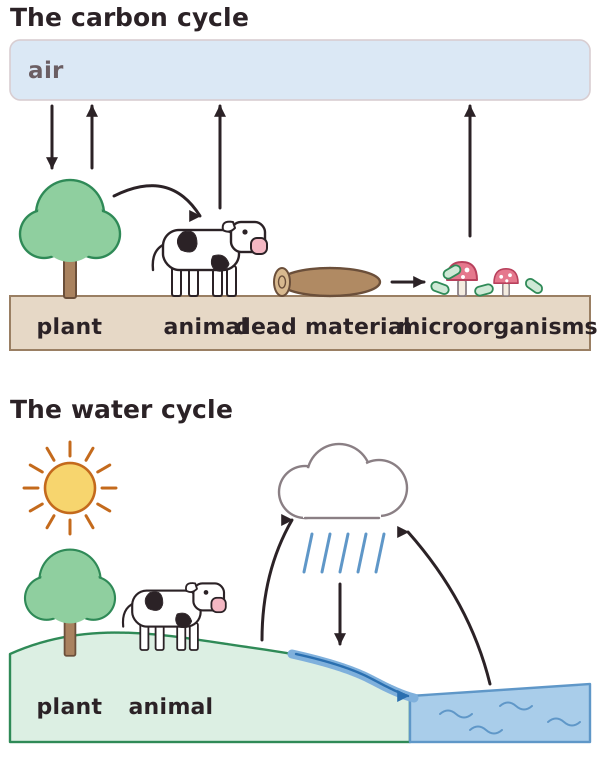
Many different materials, such as carbon and water, cycle through the abiotic (non-living) and biotic (living) parts of an ecosystem. All materials in the living world are recycled, so the atoms in your body were once part of other organisms and the environment. They are not used up for good, and they provide the building blocks for future organisms.
In the carbon cycle, plants and algae take carbon dioxide from the atmosphere and use it for photosynthesis to make glucose and other carbon compounds. The carbon passes along food chains when animals eat the plants and each other. Plants, animals and microorganisms all respire, and this returns carbon dioxide to the atmosphere, where plants can use it again. The cycle matters because it returns carbon to the atmosphere as carbon dioxide so that plants can keep making food for all organisms.
In the water cycle, energy from the Sun makes water evaporate from the land and the sea. The water vapour rises, cools and condenses, then falls as precipitation such as rain or snow. This supplies fresh water for plants and animals on land before it drains into the seas. Water is continuously evaporated and precipitated, so the cycle never stops. You are not expected to study the nitrogen cycle.
Microorganisms, called decomposers, have a key role in cycling materials. They break down the dead bodies and waste of plants and animals. Their respiration returns carbon to the atmosphere as carbon dioxide, and the breakdown returns mineral ions to the soil, where plants absorb them through their roots.