When metals react, their atoms lose electrons and form positive ions. The more easily a metal does this, the more reactive it is, so reactivity is a metal's tendency to form positive ions. We arrange metals in a reactivity series, from most to least reactive: potassium, sodium, lithium, calcium, magnesium, zinc, iron, copper. Carbon and hydrogen are often included, with carbon between magnesium and zinc and hydrogen between iron and copper. Potassium is at the top of the series and copper is near the bottom.
The order comes from reactions at room temperature. Potassium, sodium, lithium and calcium react with cold water to give hydrogen and a metal hydroxide. Potassium reacts most violently, sodium melts into a ball as it fizzes, lithium fizzes steadily and calcium fizzes more gently. Magnesium reacts only very slowly with cold water but reacts quickly with dilute acid. Zinc and iron react with dilute acid to give a salt and hydrogen, zinc faster than iron. Copper does not react with water or dilute acid. The faster the bubbles of hydrogen form, the more reactive the metal.
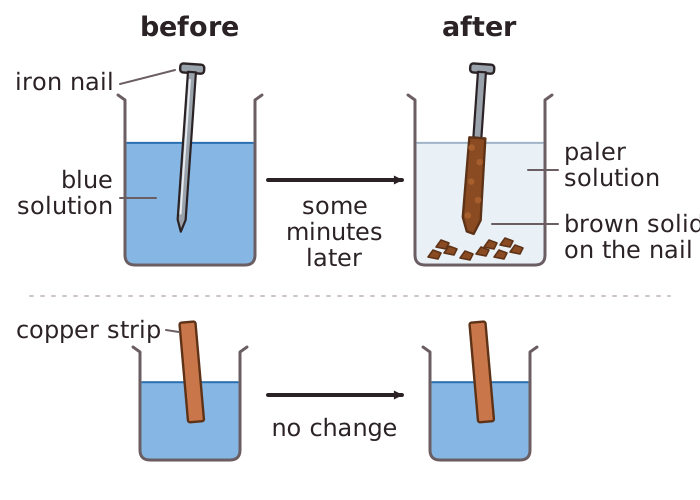
A more reactive metal can displace a less reactive metal from its compound. If you put iron in blue copper sulfate solution, iron is more reactive than copper, so it takes the place of the copper. The solution loses its blue colour as iron sulfate forms and brown copper metal appears. Copper does not displace iron from iron sulfate. If one metal displaces another, the first metal is the more reactive.