Acids produce hydrogen ions, H+, when they dissolve in water. Aqueous solutions of alkalis contain hydroxide ions, OH-. The balance of these ions decides whether a solution is acidic or alkaline.
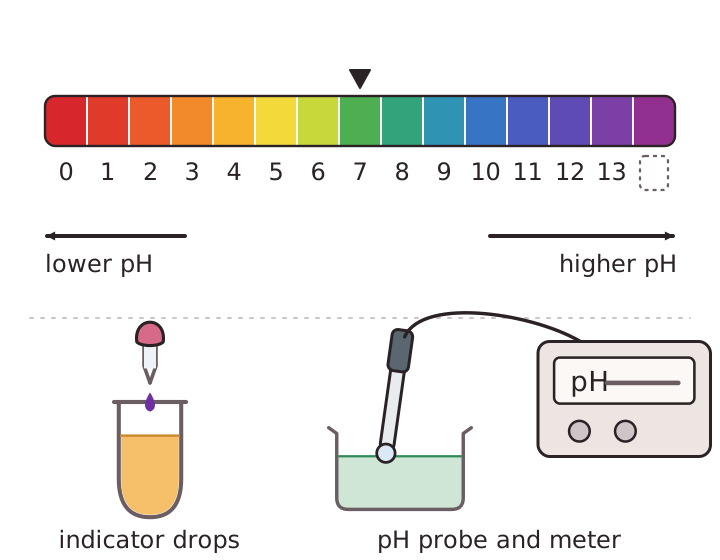
The pH scale runs from 0 to 14 and measures how acidic or alkaline a solution is. A solution with pH 7 is neutral. Aqueous solutions of acids have a pH below 7, and aqueous solutions of alkalis have a pH above 7.
You can measure the approximate pH with universal indicator or a wide range indicator. Add a few drops to the solution and compare the colour with a chart. Red shows a strongly acidic solution, green shows neutral and purple shows a strongly alkaline solution. A pH probe connected to a meter gives a more exact reading.
In a neutralisation reaction between an acid and an alkali, hydrogen ions react with hydroxide ions to produce water: H+(aq) + OH-(aq) → H2O(l).