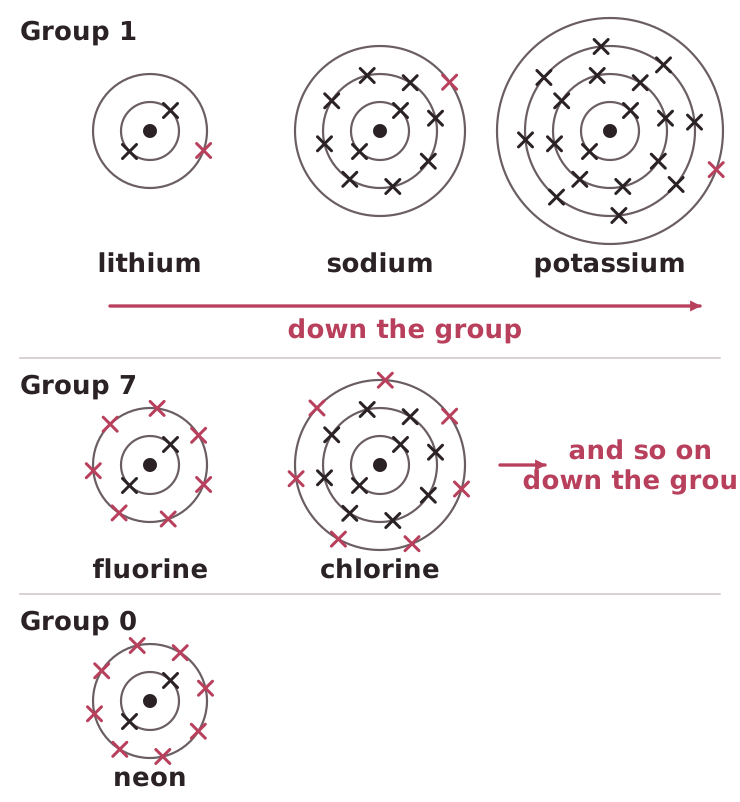
The properties of a group depend on the electrons in the outer shell. Atoms of Group 1 have one outer electron. They react by losing it to form a 1+ ion, so they are very reactive. Going down Group 1 the outer electron is further from the nucleus and there are more inner shells between them. The attraction to the nucleus is weaker, so the electron is lost more easily and reactivity increases.
Atoms of Group 7 have seven outer electrons. They react by gaining one electron to form a 1- ion. Fluorine has its outer shell closest to the nucleus, so the nucleus attracts an incoming electron strongly. Fluorine gains an electron more easily than any other halogen, so it is the most reactive halogen. The outer shell of fluorine is closer to the nucleus than the outer shell of iodine. Going down the group the outer shell is further from the nucleus, so an electron is gained less easily and reactivity decreases.
Atoms of Group 0 have a full outer shell. This is a stable arrangement, so they have no tendency to gain or lose electrons and are unreactive.
These trends let us predict properties. The melting points of lithium, sodium and potassium are 181 °C, 98 °C and 63 °C. Rubidium is below potassium, so we predict a melting point lower than 63 °C and a reactivity higher than potassium. Astatine is below iodine, so we predict it is a solid, darker in colour and less reactive than iodine.