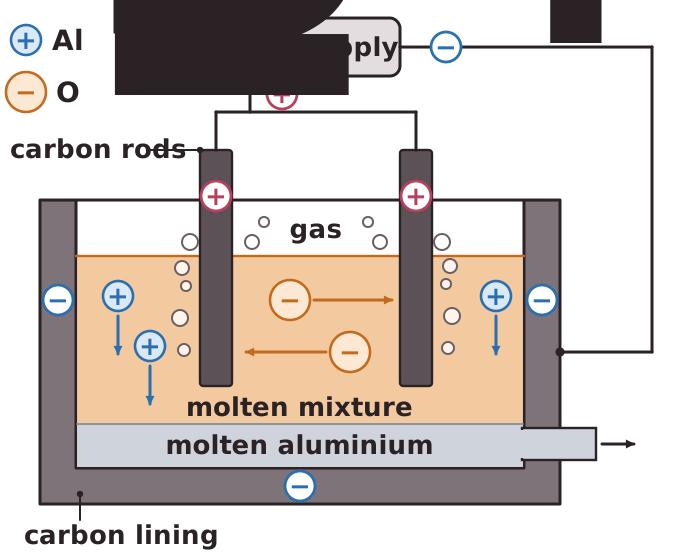
Metals that are more reactive than carbon, such as aluminium, hold on to oxygen too strongly for carbon to remove it. They are extracted by electrolysis of the molten ore. Electrolysis uses an electric current to break down an ionic compound that is molten or dissolved. The ions can only move when the compound is molten or dissolved, which is why a solid ore does not work.
Aluminium oxide has a very high melting point, so it is dissolved in molten cryolite. This lowers the temperature needed and saves energy. Positive aluminium ions move to the negative electrode, the cathode. There they gain electrons and become aluminium metal: Al3+ + 3e- → Al. Gaining electrons is reduction. Negative oxide ions move to the positive electrode, the anode, lose electrons and form oxygen gas.
The carbon anodes react with the hot oxygen to make carbon dioxide, so they burn away and must be replaced regularly. Electrolysis uses a large amount of electrical energy, which is expensive, so it is used only for metals that cannot be extracted using carbon.