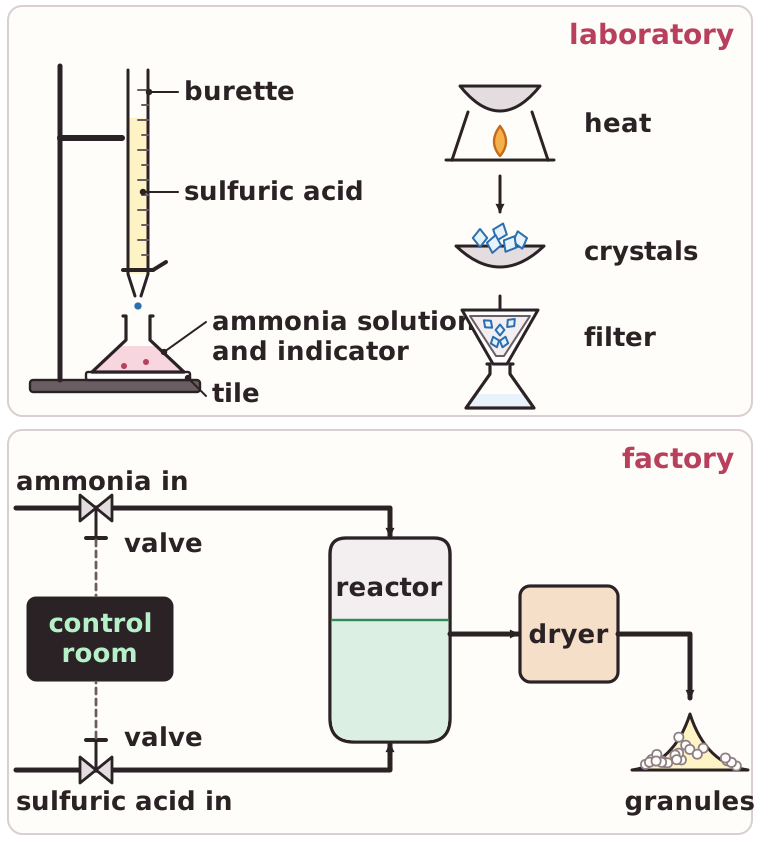
Ammonium sulfate can be made in a school laboratory or in a factory, and the reaction is the same: ammonia is neutralised by sulfuric acid. 2NH3 + H2SO4 → (NH4)2SO4. What differs is the scale and the way the process is controlled.
In the laboratory, a measured volume of ammonia solution is placed in a flask and sulfuric acid is added from a burette until an indicator shows the solution is neutral. This is a titration. It is then repeated without the indicator, using exactly that volume of acid, and the solution is heated to evaporate some water and left to crystallise. The crystals are filtered off and dried. This is a batch process that makes a small amount of very pure product, but it is slow and costs a lot per kilogram.
In industry, ammonia and sulfuric acid are fed into large reactors all day and night in a continuous process. There is no burette or indicator: the flow of each chemical is controlled by a computer. The factory makes huge quantities, measured in tonnes, at a much lower cost per kilogram. The neutralisation gives out heat, which is used to evaporate water from the solution. The product may be slightly less pure than the laboratory crystals, but it is pure enough to spread on fields.