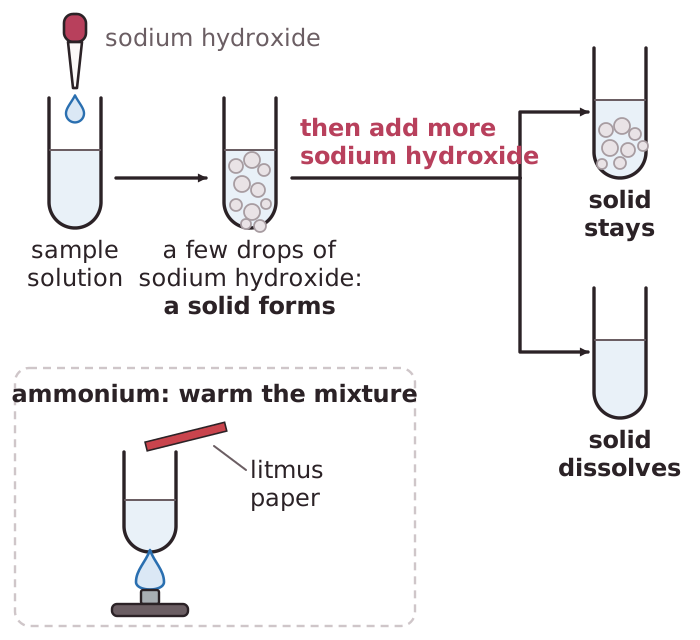
Many metal ions make insoluble metal hydroxides when sodium hydroxide solution is added. This appears as a coloured precipitate in the solution. To test, add a few drops of sodium hydroxide to a solution of the sample, note the colour, then add more to see whether the precipitate dissolves in excess.
- Aluminium ions Al3+: white precipitate that dissolves in excess, giving a colourless solution.
- Calcium ions Ca2+: white precipitate that does not dissolve in excess.
- Copper ions Cu2+: light blue precipitate that does not dissolve in excess.
- Iron(II) ions Fe2+: green precipitate that does not dissolve in excess.
- Iron(III) ions Fe3+: brown precipitate that does not dissolve in excess.
Ammonium ions NH4+ give no precipitate. Instead, warm the mixture with sodium hydroxide: ammonia gas is released, and it turns damp red litmus paper blue. A solid salt is dissolved in water before testing.
Aluminium and calcium both give white precipitates, so the excess sodium hydroxide step is what tells them apart.