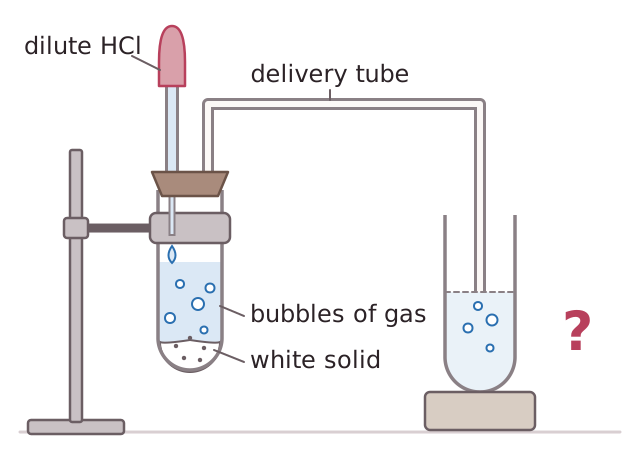
A carbonate such as calcium carbonate, CaCO3, reacts with any dilute acid to make a salt, water and carbon dioxide. Because the gas is made inside the mixture, the mixture fizzes. Scientists call this fizzing effervescence. For example: CaCO3 + 2HCl → CaCl2 + H2O + CO2.
Fizzing alone does not prove that the solid is a carbonate, because a reactive metal also fizzes in acid, giving hydrogen. So you must test the gas. Add dilute hydrochloric acid to the solid, then use a delivery tube to bubble the gas through limewater.
Limewater is a solution of calcium hydroxide. Carbon dioxide reacts with it to make calcium carbonate, which does not dissolve, so it forms a white precipitate. The limewater turns cloudy (milky). If the limewater stays clear, the gas is not carbon dioxide and the solid is not a carbonate.