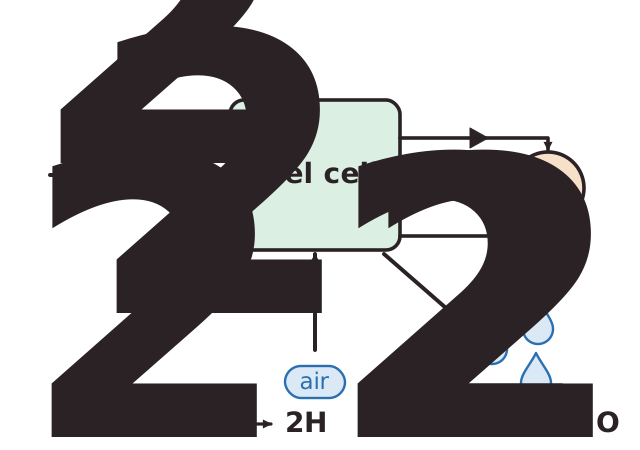
A fuel cell is a cell that makes a voltage from a fuel and oxygen. In a hydrogen-oxygen fuel cell, hydrogen and oxygen are used up to produce a voltage. The oxygen usually comes from the air.
The overall change is the same as burning hydrogen: 2H2 + O2 → 2H2O. The difference is that the energy is released as a voltage that can drive a motor, not as heat and a flame.
The only product is water. A hydrogen-oxygen fuel cell makes no carbon dioxide, so it does not add to climate change when it runs. Unlike an ordinary chemical cell, it does not go flat while hydrogen and oxygen keep being supplied.