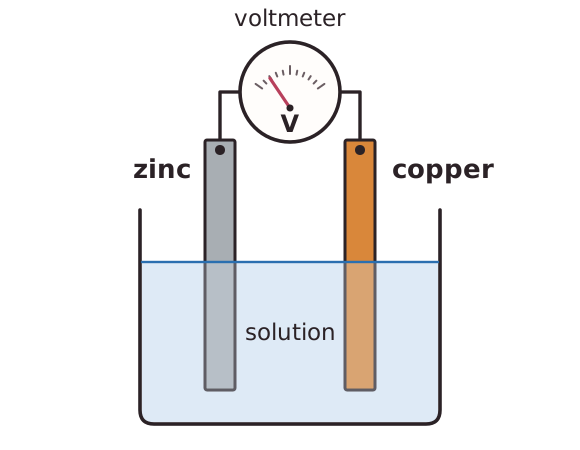
A chemical cell makes electricity from a chemical reaction. It is built from two different metals, called electrodes, dipped in an electrolyte, which is a solution that conducts. The more reactive metal loses electrons more easily, so it becomes the negative terminal. The electrons travel round the wire to the other metal, and this flow of charge gives a voltage.
The voltage lasts only while the reaction can carry on. The cell produces a voltage until one of the reactants is used up. When that happens the voltage drops to zero and the cell is flat.
The further apart the two metals are in the reactivity series, the bigger the voltage. A cell that cannot be recharged has to be replaced once it is flat. A rechargeable cell can be used again because charging reverses the reaction and rebuilds the reactants.