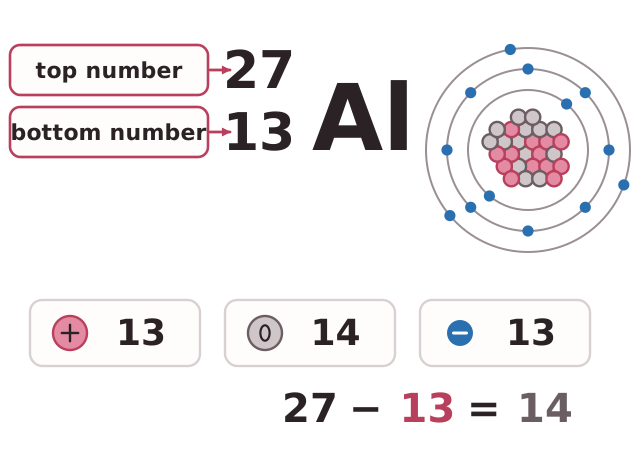
The nuclear symbol of an atom shows two numbers. The larger number is the mass number and the smaller number is the atomic number. For sodium the symbol is 2311Na, so the mass number is 23 and the atomic number is 11.
The atomic number is the number of protons. An atom has no overall charge, so the number of electrons is equal to the number of protons. The number of neutrons is found by taking the atomic number away from the mass number.
Worked example for 2311Na. Protons = 11. Electrons = 11. Neutrons = 23 − 11 = 12. Check: 11 protons + 12 neutrons = 23, which is the mass number. For 3517Cl, protons = 17, electrons = 17 and neutrons = 35 − 17 = 18. For potassium, 3919K, protons = 19, electrons = 19 and neutrons = 20. For fluorine, 199F, protons = 9, electrons = 9 and neutrons = 10.