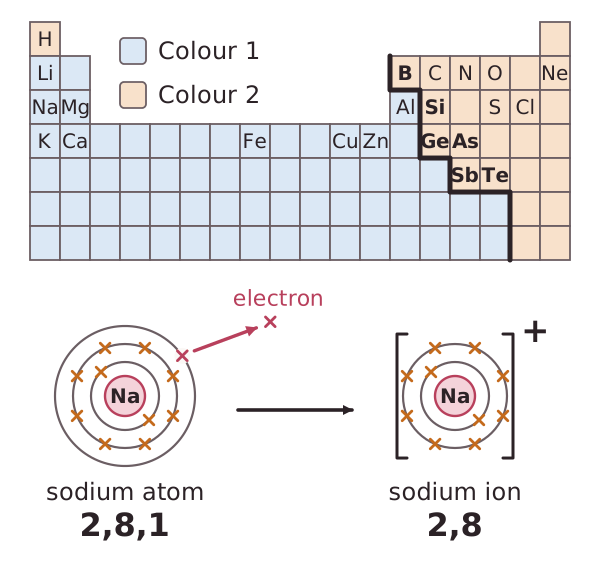
Most elements are metals. In the periodic table the metals are on the left and in the centre. The non-metals are on the right, and hydrogen is also a non-metal. A stepped line separates the two regions, and elements next to the line, such as boron, silicon and germanium, can show properties of both. You can identify an element as a metal or a non-metal from its position relative to this line.
The division comes from atomic structure. The electrons in the outer shell decide how an atom reacts. Metal atoms have few electrons in their outer shell, often 1, 2 or 3. They lose these electrons easily, forming positive ions.
Non-metal atoms have more electrons in their outer shell, usually 4 to 7, so the shell is nearly full. They tend to gain electrons to form negative ions, or to share electrons with other atoms.