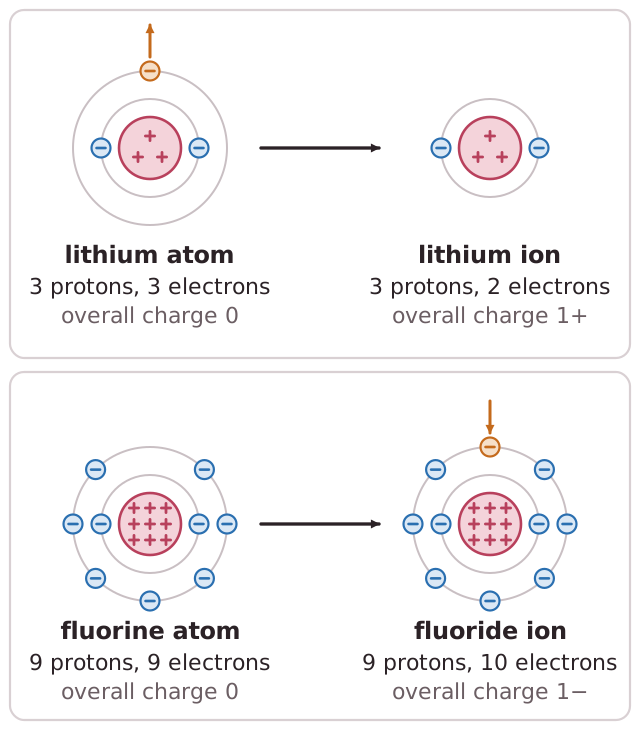
An ion is an atom or group of atoms with a positive or negative charge. An atom is neutral because it has the same number of protons and electrons, so the positive and negative charges cancel. An ion forms when an atom gains or loses electrons. The number of protons in the nucleus never changes when this happens.
If an atom loses electrons, it has more protons than electrons, so it becomes a positive ion. If an atom gains electrons, it has more electrons than protons, so it becomes a negative ion. The charge on the ion equals the number of protons minus the number of electrons. Metal atoms usually lose electrons to form positive ions, and non-metal atoms usually gain electrons to form negative ions.
Some ions are made of a group of atoms that carry a charge together. The hydroxide ion, OH-, is a group of one oxygen atom and one hydrogen atom with an overall charge of 1-.