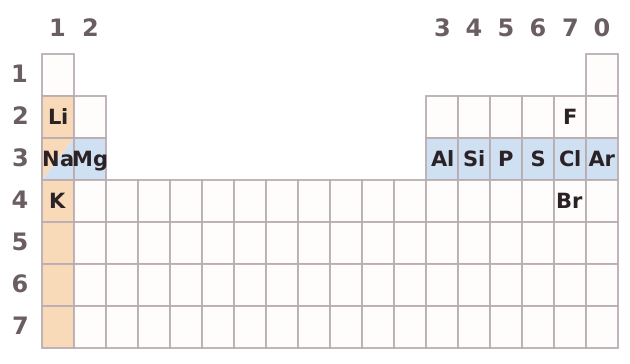
In the modern periodic table the elements are arranged in order of increasing atomic number. They are laid out in rows called periods. Each time a new period starts, the pattern of properties begins again. Period 3 runs from sodium to argon, so it contains eight elements.
Elements with similar properties are placed in the same vertical columns called groups. The elements in a group show the same pattern of behaviour. For example, lithium, sodium and potassium are in group 1. They are all soft, reactive metals. Fluorine, chlorine and bromine are in group 7, and they all form compounds in a similar way.
This is the idea that Mendeleev started, but the modern table is ordered by atomic number, not by relative atomic mass, which removes the problem pairs.