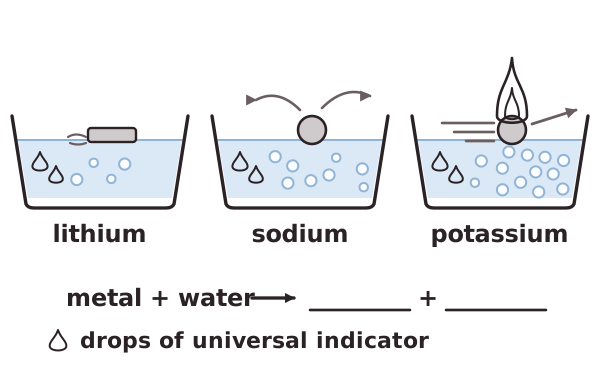
Alkali metals react with water to form a metal hydroxide and hydrogen gas. For example: sodium + water → sodium hydroxide + hydrogen, or 2Na + 2H2O → 2NaOH + H2. In the same way, 2Li + 2H2O → 2LiOH + H2 and 2K + 2H2O → 2KOH + H2. The metal hydroxide dissolves, so the solution is alkaline and turns universal indicator purple.
Lithium floats, moves slowly across the surface and fizzes steadily as hydrogen is given off, until it disappears. Sodium reacts faster: the heat from the reaction melts it into a shiny ball, which darts around the surface as it fizzes. Potassium is more vigorous still. It melts, moves very quickly and the hydrogen it produces burns with a lilac flame.