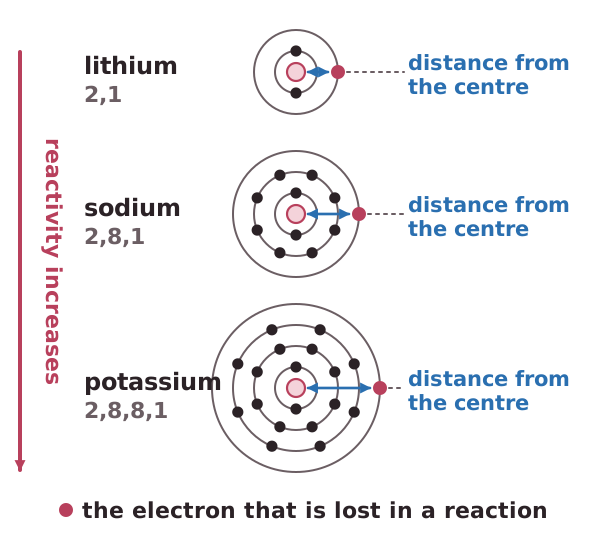
When an alkali metal reacts, each atom loses its one outer electron. The easier it is to lose that electron, the more reactive the metal. The electronic configurations show the pattern: lithium is 2,1, sodium is 2,8,1 and potassium is 2,8,8,1. Going down the group the atoms have more electron shells.
With more shells, the outer electron is further from the positive nucleus and there are more inner shells between them. So the attraction between the nucleus and the outer electron gets weaker. A weaker attraction means the electron is lost more easily, so the metal reacts more readily. This is why potassium, which has four electron shells, is more reactive than sodium, and sodium is more reactive than lithium.