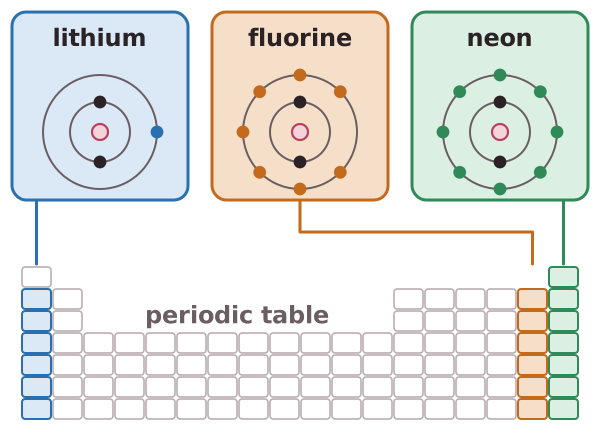
The periodic table is arranged in vertical columns called groups. Elements in the same group have the same number of electrons in their outer shell, which is why they react in similar ways. For groups 1 to 7, the group number tells you how many outer electrons the atoms have.
Group 1 contains the alkali metals: lithium, sodium and potassium. Their atoms each have one outer electron. Group 7 contains the halogens: fluorine, chlorine, bromine and iodine. Their atoms each have seven outer electrons. Group 0 is on the far right of the table and contains the noble gases, such as helium, neon and argon. Their atoms have a full outer shell, which is why they are unreactive.