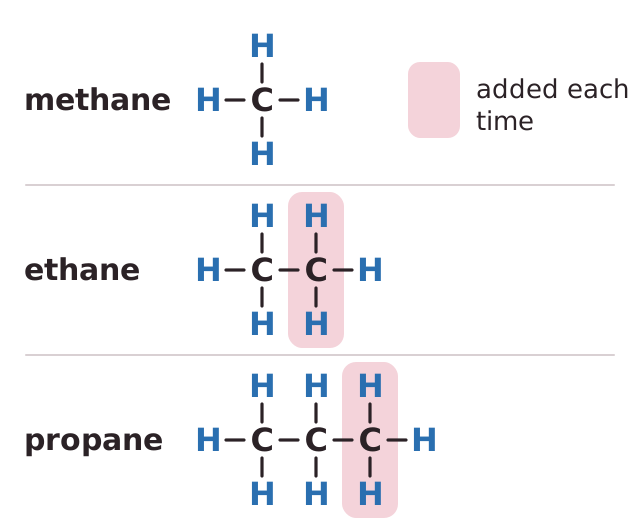
A homologous series is a family of compounds with the same general formula. The alkanes are one example, with the general formula CnH2n+2. If an alkane has three carbon atoms, it has eight hydrogen atoms, so propane is C3H8.
Neighbouring members differ by CH2 in their molecular formulae. Each member has one more carbon atom and two more hydrogen atoms than the one before: methane CH4, ethane C2H6, propane C3H8, butane C4H10. So butane has ten hydrogen atoms.
The members show a gradual variation in physical properties, for example their boiling points, which rise as the molecules get longer. So butane has a higher boiling point than propane. Members of the series also have similar chemical properties because they react in the same way.