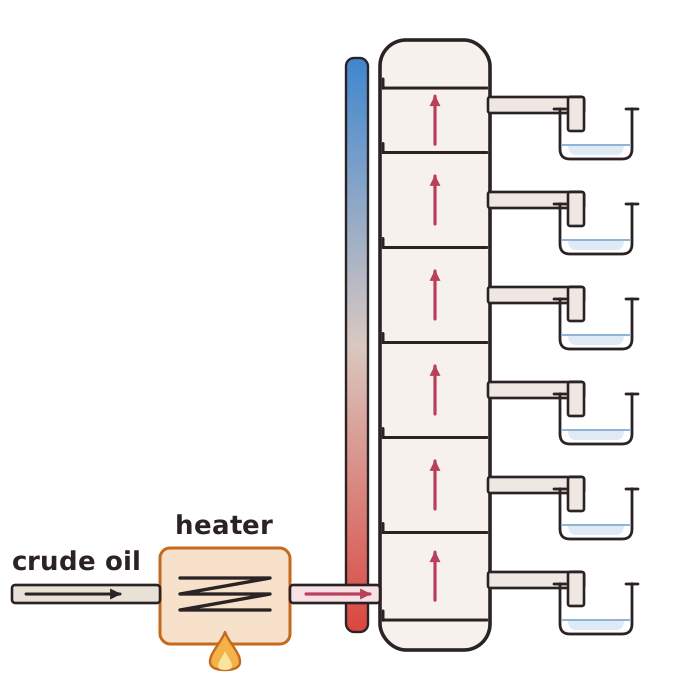
Crude oil is a mixture of hydrocarbons with different boiling points, so it can be separated into simpler, more useful mixtures by fractional distillation. Each simpler mixture is called a fraction. A fraction contains hydrocarbons with similar boiling points.
First the crude oil is heated so that it evaporates. The hot vapours enter a tall fractionating column. The column is hottest at the bottom and coolest at the top, so the temperature falls as you go up.
The vapours rise up the column. Each hydrocarbon condenses back to a liquid when it reaches a part of the column that is cooler than its boiling point. Hydrocarbons with similar boiling points condense at the same height, and each fraction is drawn off at a different height.
Molecules with the lowest boiling points travel furthest up and are drawn off at the top. Molecules with the highest boiling points condense near the bottom.