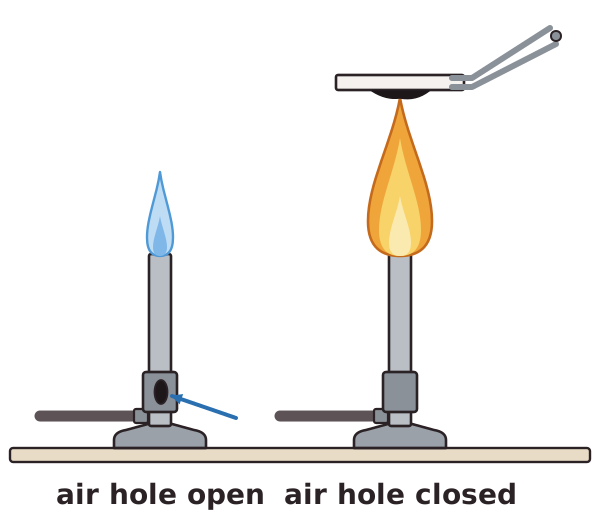
If the supply of oxygen is limited, a hydrocarbon undergoes incomplete combustion. There is not enough oxygen to turn all of the carbon into carbon dioxide, so some of the carbon ends up in other products.
Depending on how little oxygen there is, the carbon in the fuel can form carbon monoxide, CO, or solid carbon, C, which appears as black soot. The hydrogen in the fuel is still turned into water. For example: 2CH4 + 3O2 → 2CO + 4H2O and CH4 + O2 → C + 2H2O.
A Bunsen burner shows the difference. With the air hole open there is plenty of oxygen and the flame is blue. With the air hole closed there is not enough oxygen, so the flame is yellow and sooty. Incomplete combustion also gives out less energy than complete combustion of the same fuel.