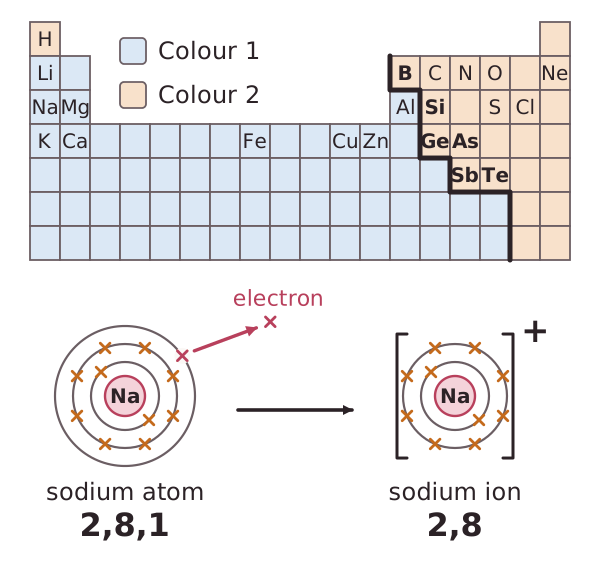
Elements that react to form positive ions are metals. Elements that do not form positive ions are non-metals. Most elements are metals. Metals are found to the left and towards the bottom of the periodic table, and non-metals are found towards the right and top.
The position of an element is linked to its atoms. Metal atoms have only a few electrons in their outer shell, and they lose these to form positive ions. A sodium atom loses its one outer electron when it reacts. Non-metal atoms have more outer electrons and do not form positive ions.
Physical properties differ too. Metals are good conductors of heat and electricity, are strong and malleable (they can be hammered into shape), are shiny and usually have high melting points. Solid non-metals are poor conductors, are dull and brittle (they break easily), and many have low melting points.
The chemical properties differ as well. Metals react with oxygen to form oxides that are basic, while non-metals form oxides that are acidic.