 BRAINCAKE
Experimental Determination of Standard Enthalpy Change of Neutralisation
When carrying out the enthalpy change of a reaction between two aqueous solutions, the immediate surrounding is the solution itself, so a thermometer can be placed in the solution to record the temperature change. 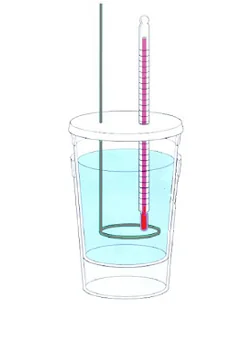 To correct for heat loss a cooling curve can be used. The temperature is measured every 30s until it stays constant. The reactants are mixed and the temperature is taken every 30s until the temperature has fallen for several minutes. A temperature-time graph is plotted. To find the correct temperature, you can extrapolate back to the time when the reactants were mixed.
Sign in free to see the rest of this lesson, the R.E.C.I.P.E. recall steps and the quiz
BrainCake is free. Make an account in seconds and pick up where this page stops.
More in Enthalpy
- Standard Enthalpy Change of Combustion
- Experimental Determination of Enthalpy Change of Combustion
- Evaluating Sources of Error
- Standard Enthalpy Change of Neutralisation
- Standard Enthalpy Change of Formation
- Enthalpy Change of a Reaction
- Hess's Law
- Hess's Law Example 2
All 21 lessons in Enthalpy · All Edexcel AS-level Chemistry topics