 BRAINCAKE
Titrations
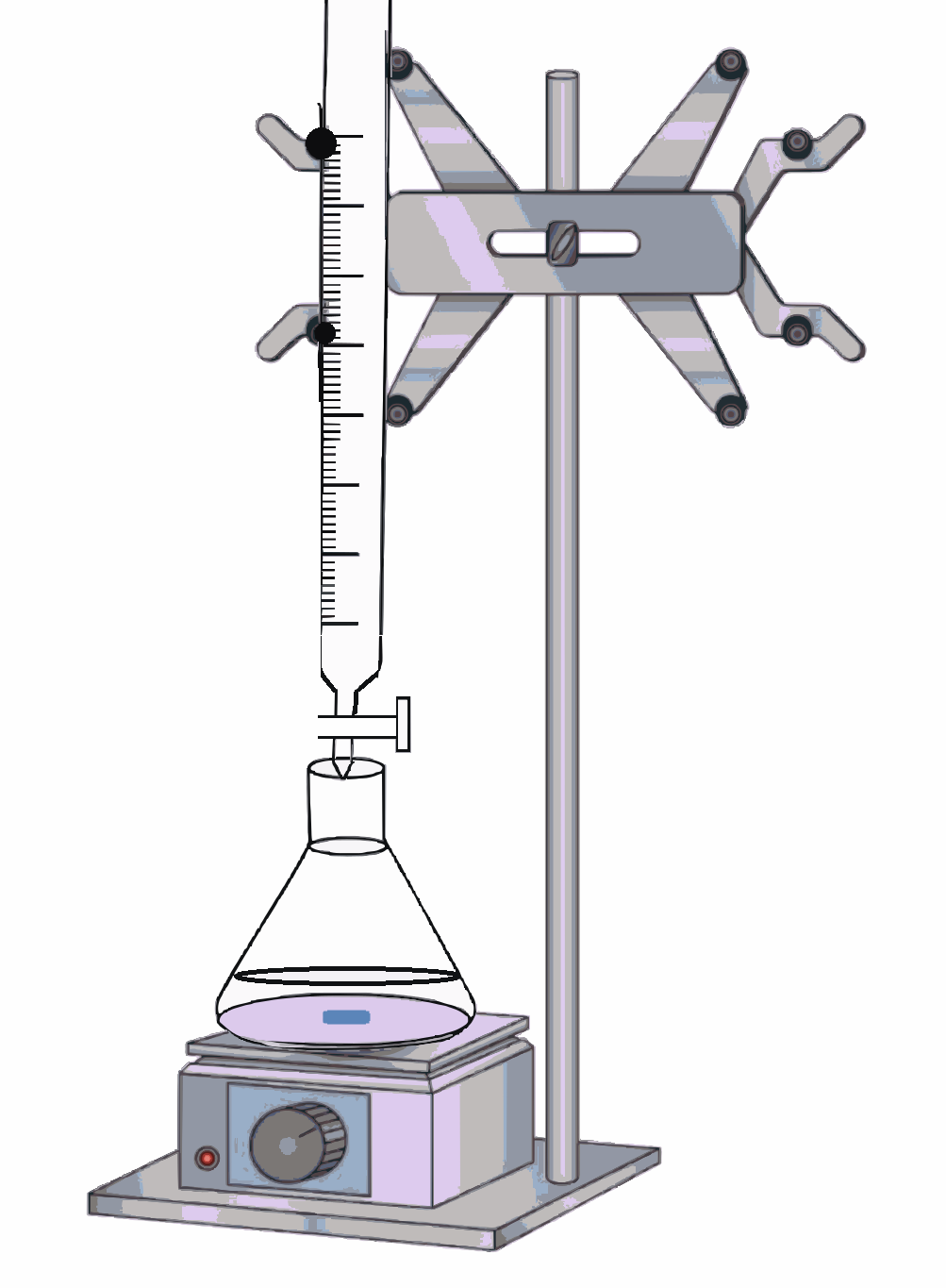
A titration is an analytical and quantitative technique to determine the volume of one solution that exactly reacts with a known volume of another solution.
Titrations can be used to find unknown concentrations or determine the molar mass and hence the identity of a compound. Titrations can also be used to determine the purity of a compound.
The procedure consists of measuring a known volume of one solution typically 25cm3 with a pipette and placing it in a conical flask and another solution in a burette.
Sign in free to see the rest of this lesson, the R.E.C.I.P.E. recall steps and the quiz
BrainCake is free. Make an account in seconds and pick up where this page stops.
Key terms in this lesson
- Molar mass
- The mass of one mole of a substance, in grams per mole.
More in Amount of Substance
- Example Question - 1
- Example Question - 2
- Balancing Equations
- Ionic Equations
- Titration Calculations
- Example Question - 1
- Example Question - 2
- Atom Economy
All 33 lessons in Amount of Substance · All AQA AS-level Chemistry topics