A titration is a technique where a solution of known concentration is used to determine the concentration of an unknown solution.Typically, the titrant (the known solution) is added from a burette to a known quantity of the analyte (the unknown solution) until the reaction is complete.The concentration of the analyte can then be determined by calculation.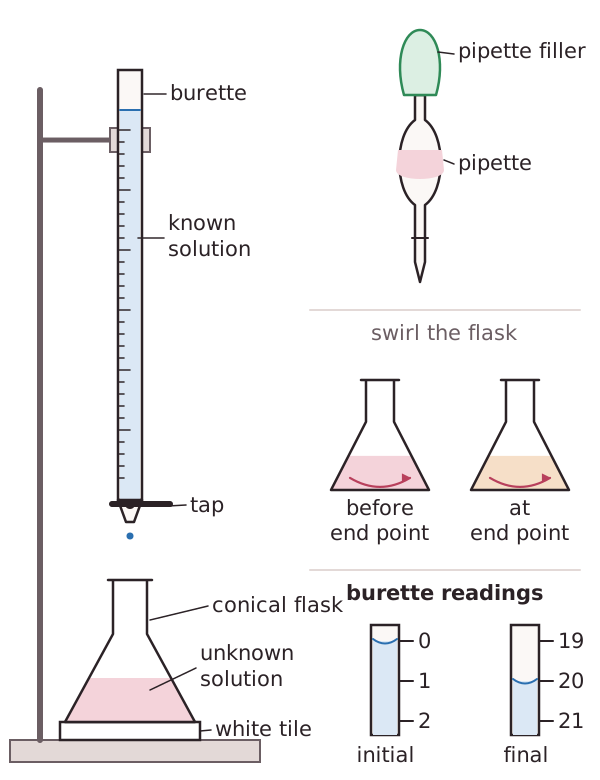 In a titration 20.0cm3 of 0.200moldm-3 of aqueous sodium hydroxide exactly neutralises a 25.0cm3 sample of sulfuric acid.Calculate the concentration of the sulfuric acid.