 BRAINCAKE
Reflux and Distillation
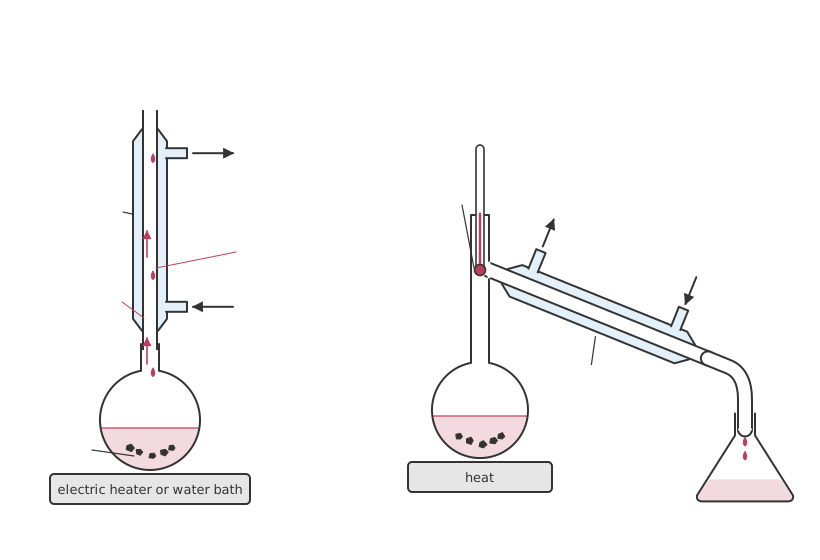
Two heating methods are used when preparing organic liquids, for example in the oxidation of alcohols.
Heating under reflux
The reaction mixture is heated in a round-bottomed flask with a condenser fitted vertically above it. Vapour rises, condenses in the condenser and drips back into the flask. So volatile reactants and products cannot escape, and the mixture can be heated for a long time until the reaction is complete. Flammable vapours are also kept in.
Cold water enters the condenser at the bottom and leaves at the top. The top of the condenser is left open so that pressure cannot build up. Anti-bumping granules give smooth boiling. An electric heater or water bath is used, not a naked flame.
Sign in free to see the rest of this lesson, the R.E.C.I.P.E. recall steps and the quiz
BrainCake is free. Make an account in seconds and pick up where this page stops.
Key terms in this lesson
- aldehyde
- An organic compound containing the -CHO functional group at the end of a carbon chain.
- carboxylic acid
- An organic compound containing the -COOH functional group.
More in Alcohols
- Ethanol by Hydration of Ethene
- Biofuels and Carbon Neutrality
- Oxidation of Alcohols
- Oxidation of Primary Alcohols to Aldehydes and Carboxylic Acids
- Oxidation of Secondary Alcohols
- Distinguishing Aldehydes and Ketones
- Dehydration of Alcohols
- Mechanism of Dehydration
All 13 lessons in Alcohols · All AQA AS-level Chemistry topics