 BRAINCAKE
Ethanol by Hydration of Ethene
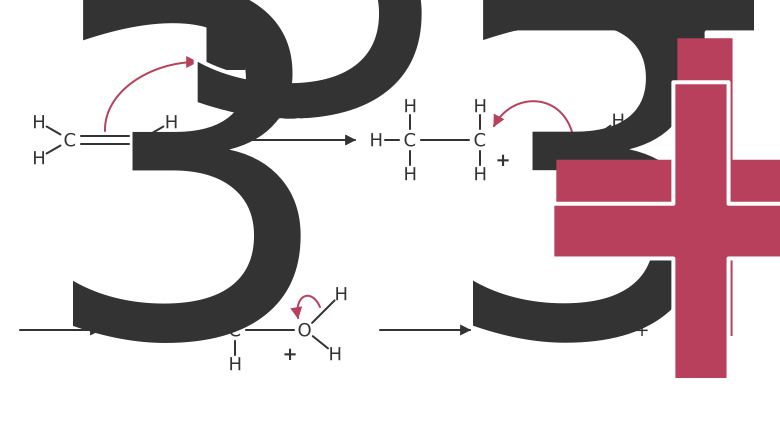
Industrially, ethanol is made on a large scale by the hydration of ethene with steam:
CH2=CH2(g) + H2O(g) ⇌ CH3CH2OH(g)
Conditions: a concentrated phosphoric acid catalyst (H3PO4), a temperature of about 300 °C and a pressure of about 60 to 70 atm. Only about 5% of the ethene reacts on each pass, so unreacted ethene is recycled, giving an overall conversion of about 95%.
Sign in free to see the rest of this lesson, the R.E.C.I.P.E. recall steps and the quiz
BrainCake is free. Make an account in seconds and pick up where this page stops.
Key terms in this lesson
- carbocation
- A positively charged carbon atom formed as a reactive intermediate when a bond breaks heterolytically.
More in Alcohols
- Alcohols
- Naming Alcohols
- Primary, Secondary and Tertiary Alcohols
- Ethanol by Fermentation
- Biofuels and Carbon Neutrality
- Oxidation of Alcohols
- Oxidation of Primary Alcohols to Aldehydes and Carboxylic Acids
- Oxidation of Secondary Alcohols
All 13 lessons in Alcohols · All AQA AS-level Chemistry topics