 BRAINCAKE
Experimental Determination of the Rate of Reaction
Titrations can be used to work out the concentration of reactants or products as the reaction progresses. Samples (aliquots) of the reaction mixture are taken at intervals for titrations to determine the concentrations.
The reactions in the samples must be quenched (stopped) before the titrations. This is done by adding the sample to ice-cold water.
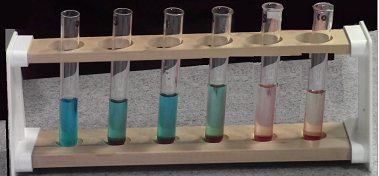
Colorimetry uses a colorimeter or a spectrophotometer to measure the amount of light of a particular frequency (colour) absorbed. The more concentrated the solution the more light is absorbed.
Sign in free to see the rest of this lesson, the R.E.C.I.P.E. recall steps and the quiz
BrainCake is free. Make an account in seconds and pick up where this page stops.
More in Rate of Reaction
- The Rate of a Reaction
- Measuring Reaction Rates
- The Rate Equation
- The Order of a Reaction
- The Rate Constant k
- Worked Example
- Half-Lives and Reaction Rate Graphs
- The Rate Determining Step
All 11 lessons in Rate of Reaction · All OCR A-level Chemistry topics