When a halogenoalkane is heated with ethanolic sodium or potassium hydroxide the OH- acts as a base rather than as a nucleophile. The hydrogen that is attached to the carbon atom next to the C-X bond reacts with the base. The results is that an elimination reaction takes place. The elimination of an HX molecule produces an alkene. Water and a halide are the other products formed.
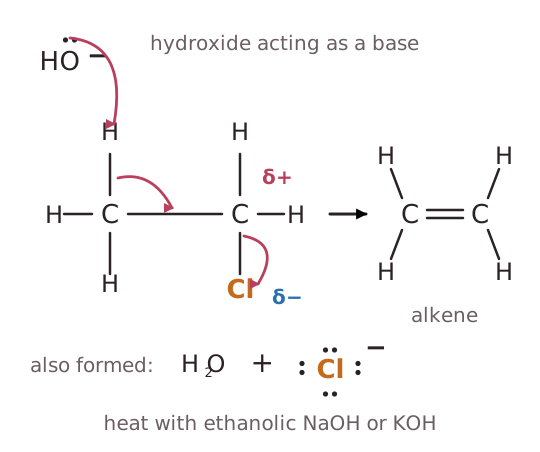
Elimination
Read the text
Read the text and highlight anything you think is important. When you go on, the text is hidden and you answer from memory.
Specification: OCR Chemistry A (H432), A-level. Topic: Halogenolkanes.
More in Halogenolkanes
- Halogenoalkanes
- Reactivity of Halogenoalkanes
- Nucleophilic Substitution - Hydrolysis
- Reaction with Ammonia
- Organohalogen compounds and the Environment
All 6 lessons in Halogenolkanes · All OCR A-level Chemistry topics