 BRAINCAKE
Alkaline Fuel Cells
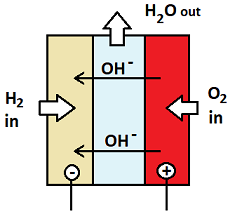
A fuel cell creates a voltage from the reaction of a fuel with oxygen. The electrolytes remain in the cell but the reactants flow into the cell and products flow out of the cell. The electrodes are porous graphite embedded with a platinum catalyst and the electrolyte is an aqueous solution of potassium hydroxide. The fuel cell can operate continuously as long as fuel and oxygen flow into the cell. Hydrogen gas is oxidised at the anode. The more negative redox equilibrium provides the electrons at the negative terminal.
2H2(g) + 4OH-(aq) &rlhar 4H2O(l) + 4e-
Sign in free to see the rest of this lesson, the R.E.C.I.P.E. recall steps and the quiz
BrainCake is free. Make an account in seconds and pick up where this page stops.
More in Electrochemistry
- Standard Electrode Potential Eθ and the Electrochemical Series
- Calomel Electrode
- Standard Cell Potentials Eθcell Values and Electrochemical Cells
- Non-Standard Conditions
- Cell Diagrams
- Thermodynamic Feasibility of a Reaction and the Extent of a Reaction
- Electrochemical Cells
- Rechargeable Batteries
All 14 lessons in Electrochemistry · All OCR A-level Chemistry topics