 BRAINCAKE
Calomel Electrode
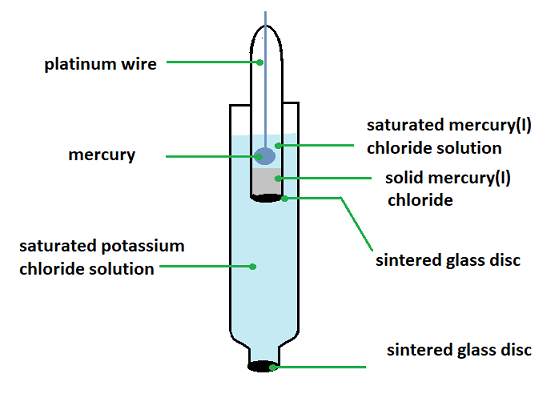
A calomel electrode can be used instead of a standard hydrogen half cell as a reference electrode. It consists of mercury in contact with a saturated solution of mercury (I) chloride. The calomel electrode has a standard electrode potential of +0.27V.
Sign in free to see the rest of this lesson, the R.E.C.I.P.E. recall steps and the quiz
BrainCake is free. Make an account in seconds and pick up where this page stops.
Key terms in this lesson
- standard hydrogen electrode
- A reference half cell, assigned an electrode potential of 0.0V by definition, consisting of hydrogen gas at 100kPa bubbled over a platinum electrode in a solution of H+ ions at 1moldm-3.
More in Electrochemistry
- Electrochemical Half Cells
- Electrochemical Cells
- The Standard Hydrogen Half Cell
- Standard Electrode Potential Eθ and the Electrochemical Series
- Standard Cell Potentials Eθcell Values and Electrochemical Cells
- Non-Standard Conditions
- Cell Diagrams
- Thermodynamic Feasibility of a Reaction and the Extent of a Reaction
All 14 lessons in Electrochemistry · All OCR A-level Chemistry topics