 BRAINCAKE
Thin-Layer Chromatography
In thin-layer chromatography (TLC), the stationary phase is a thin layer of silica (SiO2) or alumina (Al2O3) spread on a glass, metal or plastic plate. The mobile phase is a liquid solvent. Components separate by adsorption: the more strongly a component is adsorbed onto the stationary phase, the more slowly it moves.
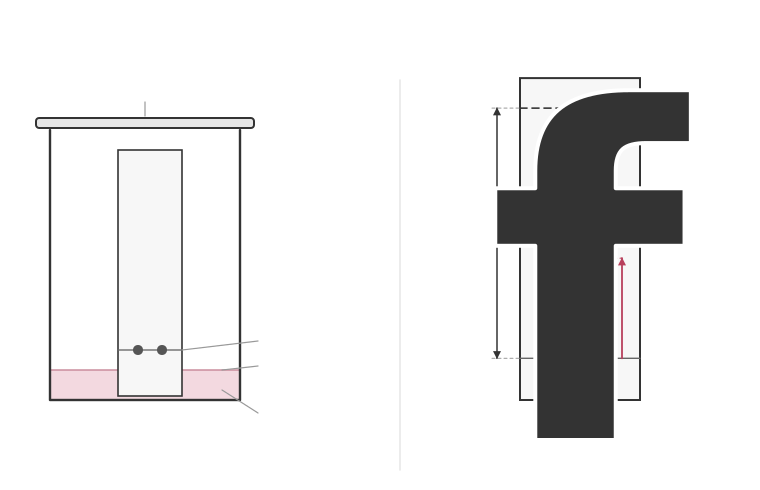
Method.
1. Draw a pencil baseline about 1 cm from the bottom of the plate.
2. Spot the mixture, and known reference compounds, on the line using a capillary tube.
3. Stand the plate in a beaker containing a little solvent. The solvent level must be below the baseline, or the spots would dissolve into the solvent.
Sign in free to see the rest of this lesson, the R.E.C.I.P.E. recall steps and the quiz
BrainCake is free. Make an account in seconds and pick up where this page stops.
More in Modern Analytical Techniques
- High Resolution Mass Spectrometry
- Precise Molecular Mass
- Chromatography
- High Performance Liquid Chromatography
- Gas Chromatography
- Retention Times
- Nuclear Magnetic Resonance
- Chemical Shift
All 15 lessons in Modern Analytical Techniques · All Edexcel A-level Chemistry topics