 BRAINCAKE
Gas Chromatography
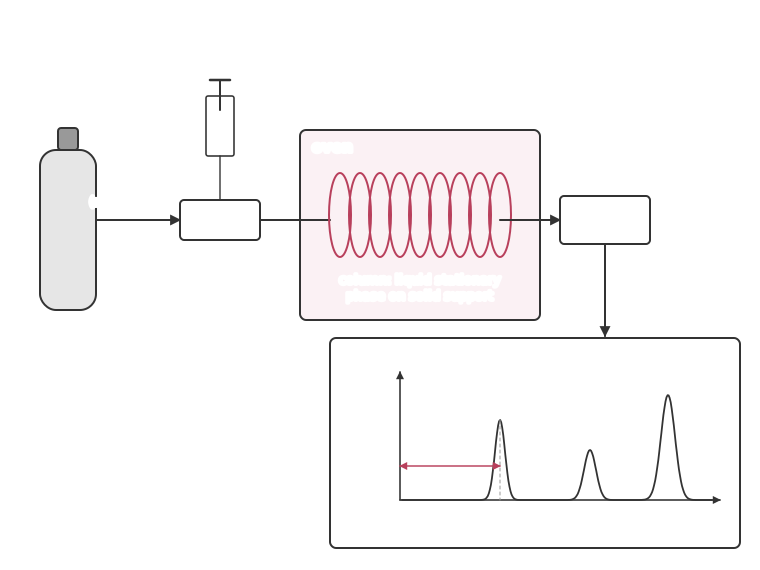
Gas chromatography (GC) separates mixtures of volatile compounds. The mixture must vaporise without decomposing.
The mobile phase is an unreactive carrier gas, such as helium or nitrogen. The stationary phase is usually a liquid with a high boiling temperature, coated as a thin film on a solid support or on the inside wall of a long, thin, coiled column. The column sits inside an oven so that the components stay in the gas phase.
Sign in free to see the rest of this lesson, the R.E.C.I.P.E. recall steps and the quiz
BrainCake is free. Make an account in seconds and pick up where this page stops.
More in Modern Analytical Techniques
- Precise Molecular Mass
- Chromatography
- Thin-Layer Chromatography
- High Performance Liquid Chromatography
- Retention Times
- Nuclear Magnetic Resonance
- Chemical Shift
- 13C NMR Spectroscopy
All 15 lessons in Modern Analytical Techniques · All Edexcel A-level Chemistry topics