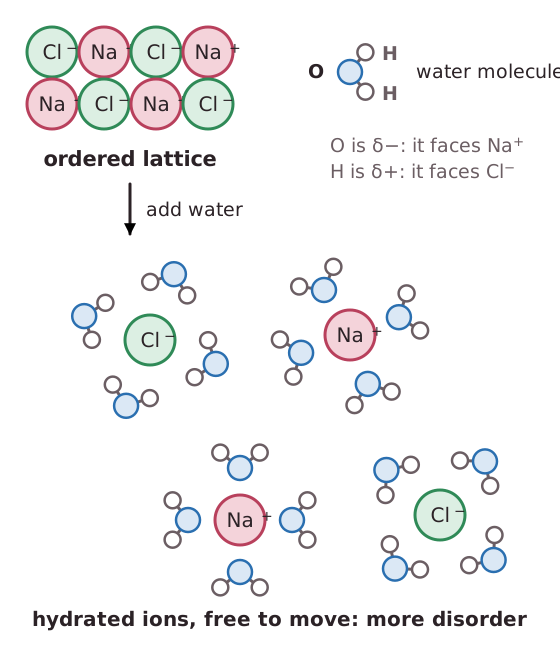
The entropy change of a system is given byΔSθsystem = ΣSθproducts - ΣSθreactantsThe entropy change in a system is the difference between the sum of the standard entropies of the products and the reactants. The entropy of a system will increase if a solid melts, a liquid turns into a gas, a solid lattice dissolves in a liquid, a reaction takes place which forms a larger number of moles of gas, the number of moles of product is greater than the number of moles of reactant.The entropy increases as the complexity of the substance increases.