Aliphatic compounds are organic compounds without a benzene ring. Most routes pass through a few key functional groups, so it helps to learn them as a connected map.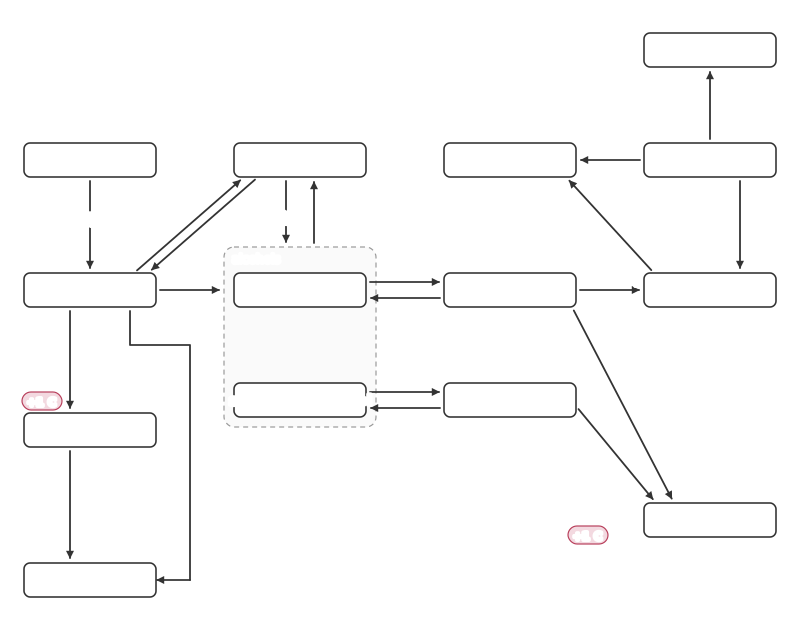
• NaOH(aq), warm → alcohol
• KCN in aqueous ethanol → nitrile (one more carbon)
• excess ethanolic NH3 → primary amine
• KOH in ethanol, hot → alkeneFrom alkenes: HBr → bromoalkane; Br2 → dibromoalkane; steam with H3PO4 catalyst → alcohol.From alcohols: acidified potassium dichromate(VI) oxidises primary alcohols to aldehydes and then carboxylic acids, and secondary alcohols to ketones; heating with concentrated H2SO4 or H3PO4 gives alkenes.From aldehydes and ketones: NaBH4 reduces them to alcohols; KCN then dilute acid gives hydroxynitriles (one more carbon).From acids and acyl chlorides: a carboxylic acid with an alcohol and concentrated H2SO4 gives an ester; acyl chlorides give acids, esters, amides and N-substituted amides with water, alcohols, ammonia and amines.From nitriles: reduction with LiAlH4 or H2/Ni gives a primary amine.Worked example. Convert 2-bromopropane into propanone. Step 1: warm NaOH(aq) gives propan-2-ol. Step 2: acidified potassium dichromate(VI), heat, oxidises this secondary alcohol to propanone.