 BRAINCAKE
Electrochemical Cells
Electrochemical cells are used as a source of electrical energy. They are made of two half cells with different electrode potentials. There are three main types: Non-rechargeable cells, rechargeable cells and fuel cells. With non-rechargeable cells the reactions continue until the reactants are used up. The voltage then drops and the cell gets flat. It is then discarded.
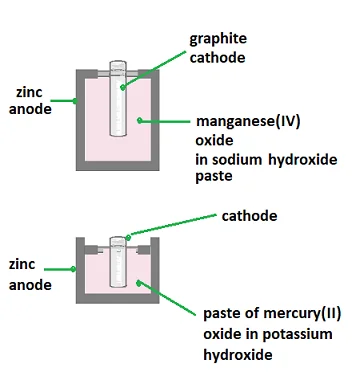
AA batteries consist of a zinc anode and cathode made of a a carbon rod full of granules of magnesium (IV) oxide in a paste of ammonium chloride (electrolyte). Alkaline batteries have sodium hydroxide as the electrolyte. At the anode zinc is oxidised.:
Sign in free to see the rest of this lesson, the R.E.C.I.P.E. recall steps and the quiz
BrainCake is free. Make an account in seconds and pick up where this page stops.
More in Electrochemistry
- Standard Electrode Potential Eθ and the Electrochemical Series
- Calomel Electrode
- Standard Cell Potentials Eθcell Values and Electrochemical Cells
- Non-Standard Conditions
- Cell Diagrams
- Thermodynamic Feasibility of a Reaction and the Extent of a Reaction
- Rechargeable Batteries
- Alkaline Fuel Cells
All 14 lessons in Electrochemistry · All AQA A-level Chemistry topics