 BRAINCAKE
Polyesters
A polyester is a condensation polymer in which the repeating units are joined by ester links, -COO-. It forms when the -COOH groups of a dicarboxylic acid react with the -OH groups of a diol, eliminating a molecule of water at each link.
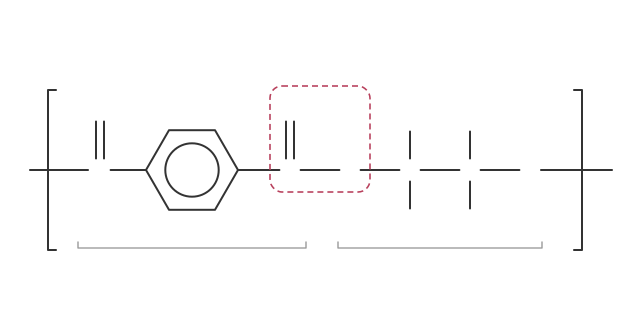
The best-known example is Terylene (also called PET), made from benzene-1,4-dicarboxylic acid and ethane-1,2-diol:
n HOOC-C6H4-COOH + n HOCH2CH2OH → [-CO-C6H4-CO-O-CH2CH2-O-]n + (2n − 1) H2O
Sign in free to see the rest of this lesson, the R.E.C.I.P.E. recall steps and the quiz
BrainCake is free. Make an account in seconds and pick up where this page stops.
More in Condensation Polymers
- Condensation Polymers
- Polyamides
- Nylon-6,6 and Kevlar
- Drawing Repeat Units
- Hydrogen Bonding between Polymer Chains
- Biodegradability of Polymers
- Disposal and Recycling of Polymers
All 8 lessons in Condensation Polymers · All AQA A-level Chemistry topics