Vegetable oils and animal fats are esters of propane-1,2,3-triol, which is also called glycerol, CH2(OH)CH(OH)CH2OH. Glycerol has three OH groups, and each one forms an ester link with a long-chain carboxylic acid (a fatty acid). The product, with three ester groups, is called a triglyceride.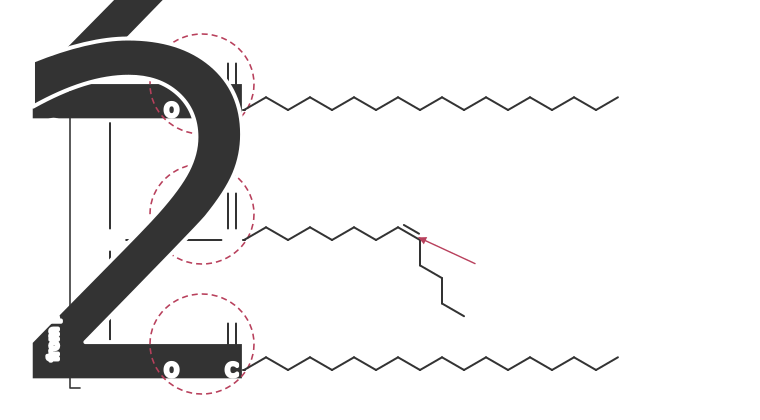
glycerol + 3 fatty acids → triglyceride + 3H2O The three fatty acid chains may be the same or different. A typical saturated fatty acid is octadecanoic (stearic) acid, C17H35COOH.Oils or fats? The difference is the chains.Fats (such as lard and butter) are solid at room temperature. Their chains are mostly saturated, so they are straight and pack closely together, giving stronger van der Waals forces between molecules.Oils (such as olive and sunflower oil) are liquid at room temperature. Their chains are more unsaturated: they contain C=C double bonds, usually cis, which put kinks in the chains. The molecules cannot pack as closely, so the van der Waals forces are weaker and the melting point is lower.Because they are esters, fats and oils can be hydrolysed, which is the basis of soap making and biodiesel production.