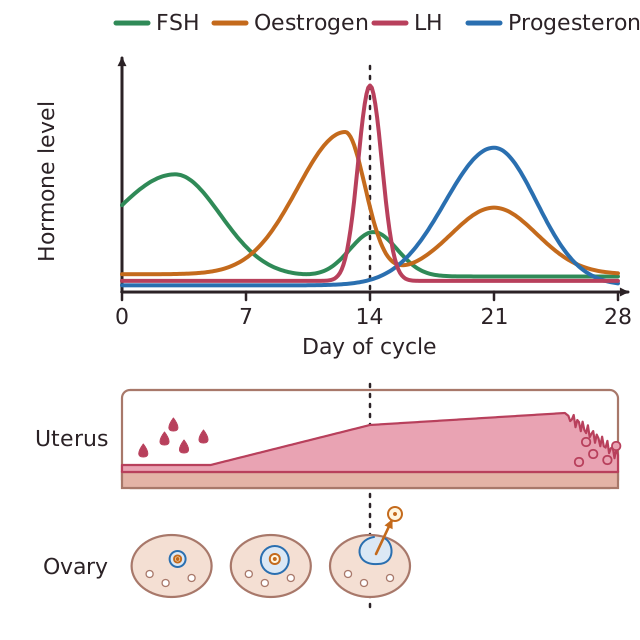
The menstrual cycle is controlled by four hormones that affect one another. At the start of the cycle the pituitary gland releases FSH. FSH makes an egg mature in an ovary and makes the ovary release oestrogen. Oestrogen repairs and thickens the lining of the uterus. It also inhibits FSH, so only one or two eggs mature, and in the middle of the cycle the high level of oestrogen makes the pituitary release a surge of LH.
The surge of LH triggers ovulation, the release of the egg, at around day 14. After ovulation the ovary starts to make progesterone. Progesterone keeps the lining thick and inhibits FSH and LH, so no more eggs mature while the lining is ready for a possible embryo.
If the egg is not fertilised, the progesterone level falls. The lining can no longer be kept thick and it breaks down, so menstruation begins and a new cycle starts. If the woman becomes pregnant, progesterone stays high and the lining is kept.
Graphs of hormone levels show the pattern. FSH is highest early in the cycle. Oestrogen peaks just before ovulation, followed by a sharp peak of LH. Progesterone is highest in the second half of the cycle, after ovulation.