A woman is infertile if she cannot become pregnant. One cause is too little FSH, so eggs do not mature or ovulation does not happen. Doctors can treat this with fertility drugs that contain FSH and LH. FSH stimulates eggs to mature in the ovary and LH triggers ovulation.
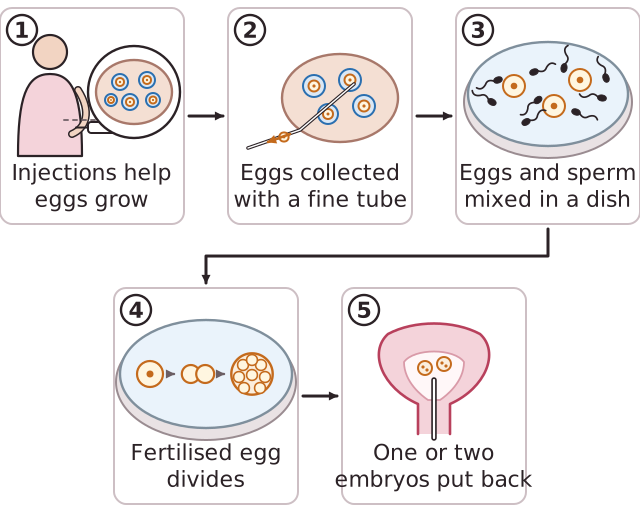
In IVF (in vitro fertilisation) the woman is given FSH and LH to make several eggs mature at the same time. The eggs are collected from her ovaries and mixed with sperm in a laboratory. The eggs are fertilised and the embryos start to develop. One or two embryos are then put into the uterus. Hormones are used to help the lining of the uterus to be ready.
IVF helps many couples but has drawbacks. It can be stressful emotionally, it is expensive, it often has to be repeated and there are physical risks. Putting in more than one embryo can lead to multiple births, which carry more risk for mother and babies.
Hormones were also once used to test for pregnancy. After an embryo implants, it makes the hormone hCG, which appears in the mother's urine. When urine from a pregnant woman is injected into a female African clawed frog (Xenopus laevis), the hCG makes the frog lay eggs. This test has been replaced by modern pregnancy tests that detect hCG using antibodies.