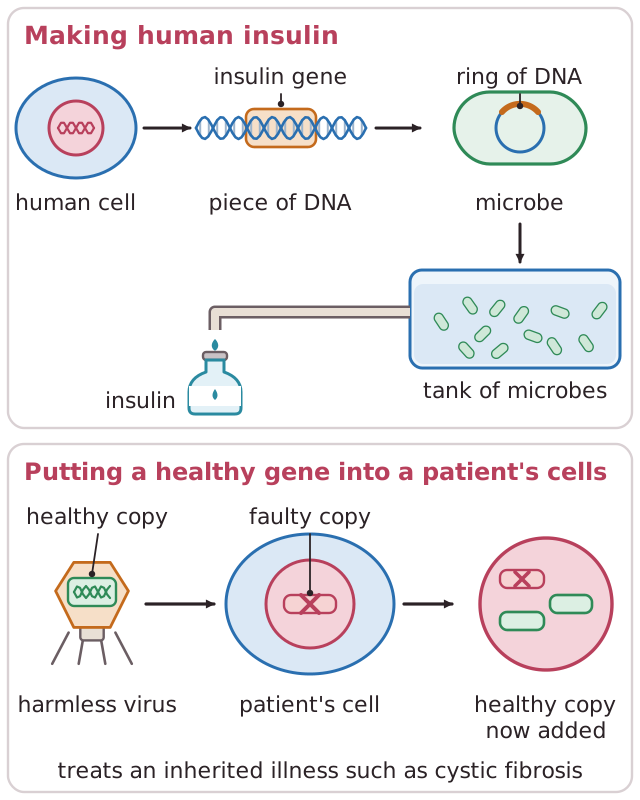
Gene technology means changing the genes of an organism. In medicine it has two main uses. First, genes can be put into bacteria so that they make useful human proteins. The human insulin gene is cut out, inserted into bacterial DNA, and the genetically modified bacteria are grown in large tanks. The insulin made is identical to human insulin and the supply is reliable, with no need to extract it from animals.
Second, in gene therapy a healthy allele is put into the cells of a patient to replace or make up for a faulty one that causes a genetic disorder, such as cystic fibrosis. A vector, often a harmless virus, carries the gene into the cells. This could treat disorders that have no other cure.
There are risks and concerns. The gene may be inserted in the wrong place and damage another gene, which could lead to cancer. The body may react to the vector, and the effect may wear off, so treatment may need repeating. The cost may be very high, so not everyone could have it, which is a practical concern.
There are also ethical concerns. If the change is made to an embryo, it would be passed on to future children, who cannot agree to it. Some people worry that gene technology could be used to choose features such as appearance rather than to treat disease.