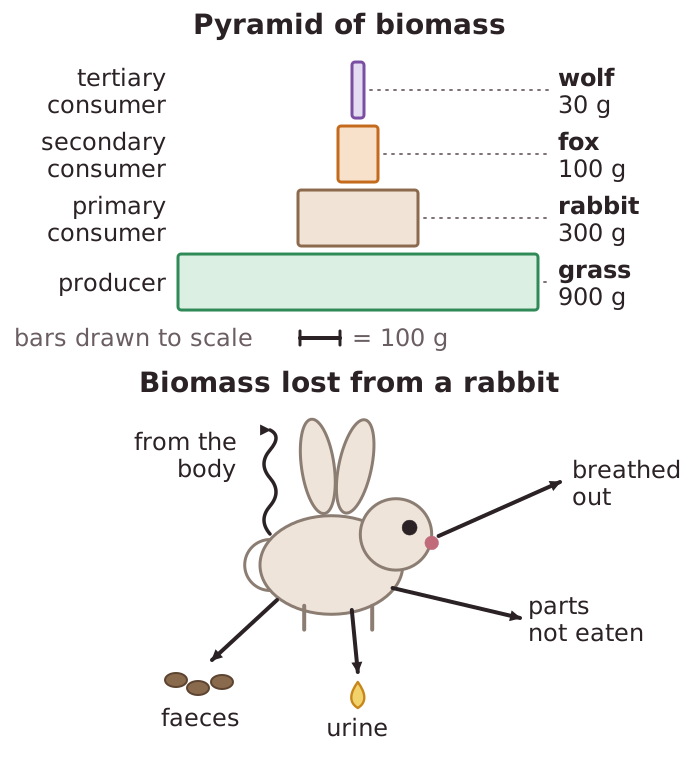
A pyramid of biomass shows the mass of living material, called biomass, at each trophic level in a food chain. Each bar is drawn to scale, with the producers at the bottom. Dry mass is usually used, because the amount of water in organisms varies. The bottom bar is the widest and the bars become narrower towards the top, because biomass is lost at every stage.
Not all the biomass in one trophic level becomes biomass in the next. Some parts of organisms are not eaten, such as bones, roots and shells. Some of what is eaten is not digested, and it leaves the body in faeces. This is egestion. Waste products such as urea in urine and carbon dioxide from the lungs are lost by excretion.
Most of the loss is due to respiration. Glucose is broken down to release energy for movement and to keep warm. Carbon is lost as carbon dioxide and energy is lost as heat. So a rabbit that eats a lot of grass gains only a small fraction of that grass as new rabbit biomass.