Metabolism is the name for all the chemical reactions that happen in a living cell, such as respiration and protein synthesis. These reactions would be far too slow at body temperature without help. Enzymes are biological catalysts. They are proteins that speed up metabolic reactions and are not used up, so one enzyme can be reused many times.
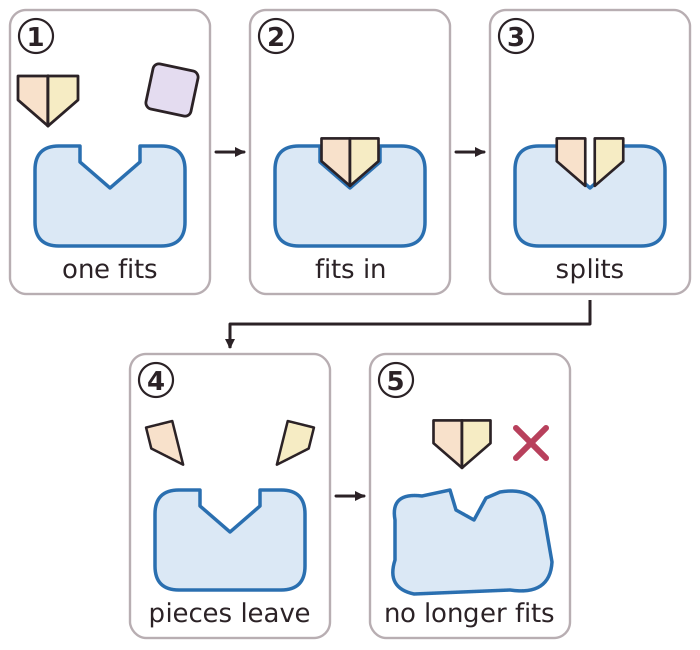
Each enzyme has a region called the active site, which has a very particular shape. The substrate is the molecule the enzyme acts on. In the lock and key hypothesis the substrate fits the active site like a key in a lock, forming an enzyme-substrate complex. The reaction happens, the products leave, and the active site is free for another substrate. Only a substrate with a matching shape fits, so each enzyme is specific to one reaction.
Temperature affects the rate. As it rises, particles move faster and collide more often, so the rate increases up to the optimum temperature. Above the optimum, the bonds holding the protein in shape break, the active site changes shape and the substrate no longer fits. The enzyme is denatured, and this cannot be undone. The optimum pH works in the same way: a pH that is too high or too low denatures the enzyme.
Concentration matters too. More substrate raises the rate until every active site is in use, and then the rate levels off. More enzyme means more active sites, so the rate rises if there is plenty of substrate. A rate can be worked out as the amount of product formed divided by the time taken.