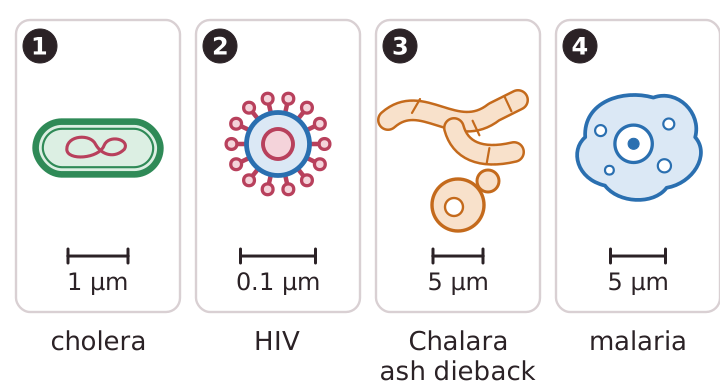
A pathogen is an organism that causes disease. Pathogens can infect animals and plants. There are four main groups: bacteria, viruses, fungi and protists.
Bacteria are single-celled organisms. They reproduce rapidly inside the body and many release toxins that damage tissues. Cholera is caused by bacteria. Viruses are much smaller than bacteria and are not made of cells. They can only reproduce inside the cells of a host, which damages those cells. HIV is a virus.
Fungi can be single-celled or made of thread-like structures. Chalara ash dieback is caused by a fungus. Protists are single-celled organisms with a nucleus, and many of them are parasites. Malaria is caused by a protist.