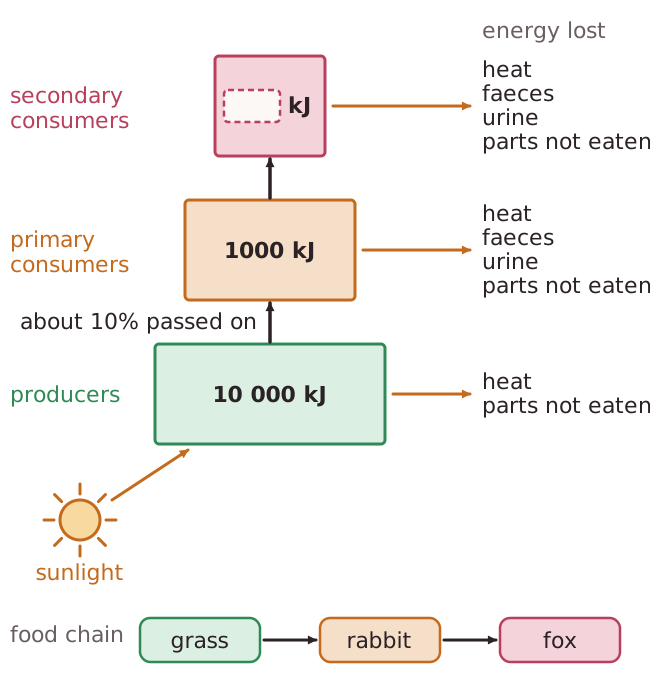
Producers capture only a small fraction of the light that reaches them and store it as chemical energy in their biomass, the mass of living material. When a consumer eats a plant or animal, only part of that energy ends up in the consumer's own body. The rest is transferred to less useful forms, so it is not available to the next trophic level.
Energy is lost at each trophic level in several ways:
- Respiration releases energy as heat to the surroundings and supplies movement and, in birds and mammals, body warmth.
- Undigested material leaves the body as faeces, and waste from excretion leaves in urine.
- Some parts are never eaten, such as bones, roots and shells.
Because of these losses, roughly 10% of the energy at one trophic level reaches the next. For example, 10 000 kJ in the producers becomes about 1000 kJ in the primary consumers and about 100 kJ in the secondary consumers.
Less energy means less biomass and fewer organisms at each higher trophic level. This limits a food chain to four or five trophic levels, because too little energy remains to support another one. It also gives a pyramid of biomass its shape, wide at the base and narrower at each level above, as each bar shows the mass of living material at that level.