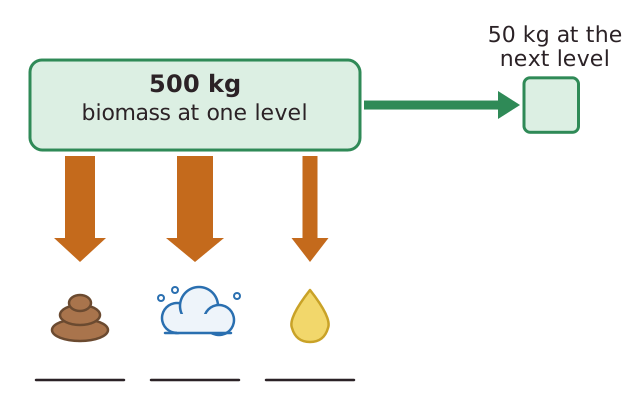
Producers are mostly plants and algae. They transfer only about 1% of the incident energy from light for photosynthesis into biomass. Between trophic levels, only approximately 10% of the biomass from each level is transferred to the level above it.
Biomass is lost at each level in several ways. Not all the material an animal ingests is absorbed: some is egested as faeces. Some of the absorbed material is lost as waste, such as carbon dioxide and water from respiration, and water and urea in urine. Large amounts of glucose are used in respiration, so this glucose is not built into new biomass.
You can calculate the efficiency of a biomass transfer using a percentage:
efficiency = (biomass transferred to the next level ÷ biomass available at the previous level) × 100
For example, if 500 kg of biomass at one level produces 50 kg at the next level, the efficiency is 50 ÷ 500 × 100 = 10%.
Because so much biomass is lost at each step, there is less available for each higher level. This is why food chains are short and why there are fewer organisms at higher trophic levels.