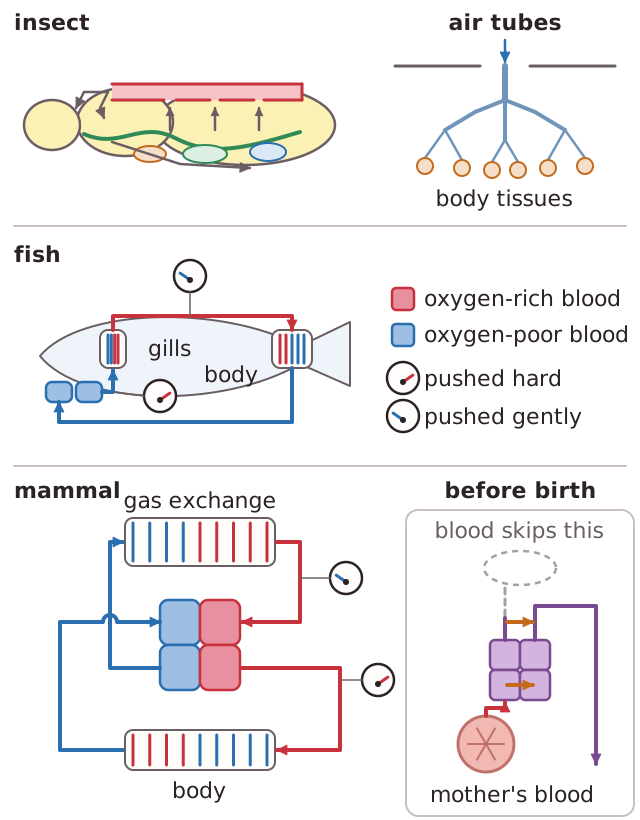
Single closed circulatory Systems are a single loop system, where blood passes through two sets of capillaries before it returns to the heart.Gills are the respiratory organs in aquatic animals like fish, that facilitate the exchange of gases, while a single circulatory system is a pathway where blood passes through the heart only once per complete circuit.In this system, the heart pumps deoxygenated blood to the gills, where it is oxygenated before being sent directly to the rest of the body's tissues.The blood then returns to the heart to begin the circuit again.The efficiency of the process is limited by the reduction of blood pressure by the blood vessels.In fish, the blood passes through two sets of capillaries travelling from heart to capillaries in the gills where gas exchange takes place and then from gills to capillaries in the tissues.The reduction in pressure before the capillaries protects the delicate capillary walls and is caused by friction.Blood is filtered out of the capillaries.Capillaries reduce pressure due to friction and fluid loss as fluid is pushed out of the vessel and into the surrounding interstitial fluid, which lowers the hydrostatic pressure of the remaining blood.