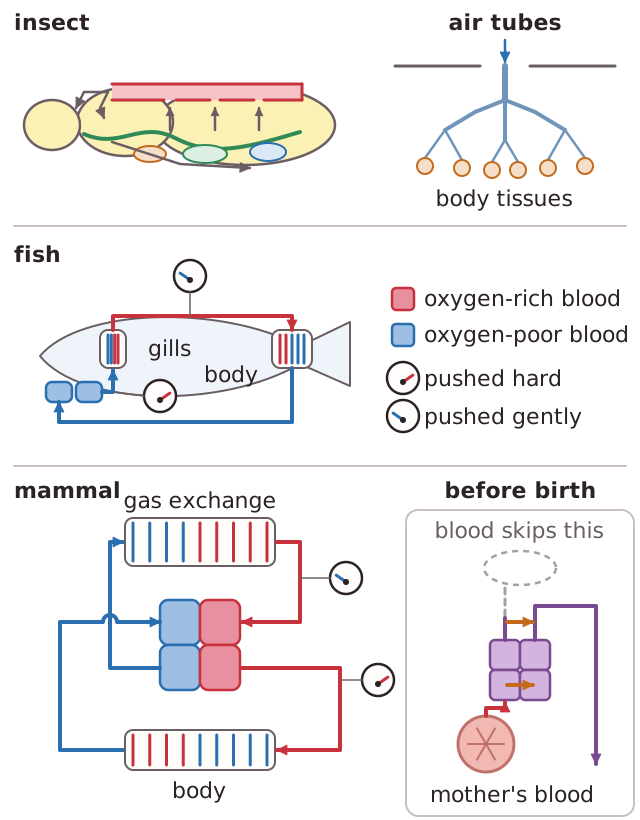
In a double circulatory system, blood flows through the heart twice for each circulation of the body.Mammals have a closed, double circulatory system.In mammals there are two circulations - pulmonary and systemic.In the pulmonary circulation, blood is pumped from the heart to the lungs to pick up oxygen and unload carbon dioxide. It then returns to the heart.In the systemic circulation oxygenated blood is pumped from the heart around the body. Deoxygenated blood then returns to the heart.The advantage of a double circulatory system is that oxygenated and deoxygenated blood do not mix so the tissues receive as much oxygen as possible. The heart can increase the pressure of the blood after it has passed through the lungs.If the pulmonary circulation is too high it may damage the delicate capillaries of the lungs.In mammals, the blood passes through two sets of capillaries travelling from the heart to capillaries in the lungs where gas exchange takes place and then from lungs to the heart and then to the capillaries in the tissues