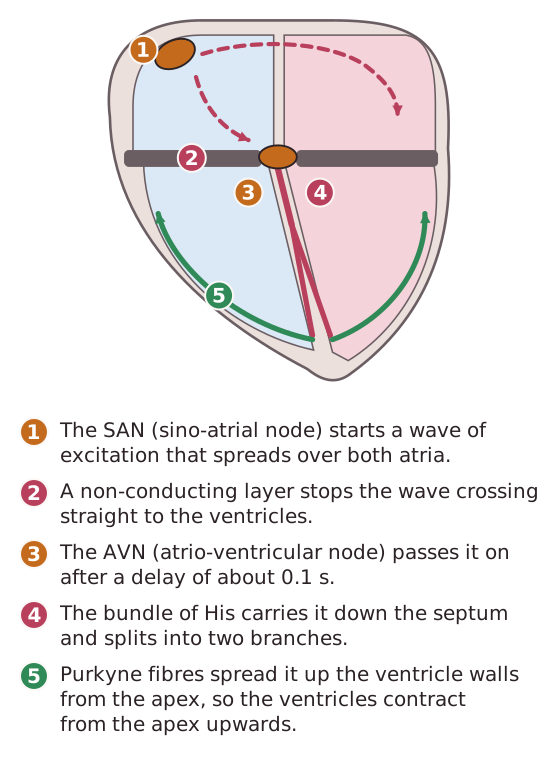
Cardiac muscle is myogenic - it has its own intrinsic rhythm of around 60 beats per minute.The basic rhythm is initiated by a wave of electrical excitation that begins in the pacemaker, a group of cells called the SAN or sino-atrial node.This causes both atria to contract simultaneously.A layer of non-conducting tissue between the atria and ventricles stops the wave of excitation passing to the ventricles.The electrical activity passes to the AV Node in the septum and after a slight delay of about 0.1s the electrical wave is passed down the Bundle of His, a band of conducting tissue in the septum.The Bundle of His splits into two branches of Purkyne fibres, which spread the wave of excitation across the ventricles from the apex upwards. The ventricles contract from the apex upwards.