Fish have a waterproof covering. They are relatively large and so have a small surface area to volume ratio.In order to supply and remove respiratory gases they have evolved a specialised internal gas exchange surface called the gills.Gills are located in the body behind the head.They are made of stacks of very thin gill filaments. At right angles to the gill filaments are the gill lamellae which increase the surface area of the gills.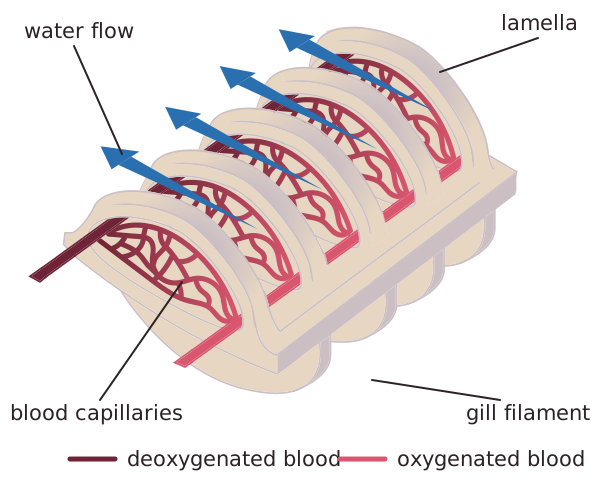 The flow of water over the gill lamellae and the flow of blood within them are in opposite directions.This is called a countercurrent flow.