Antibiotic resistant bacteria
MRSA (Methicillin resistant staphylococcus aureus) has developed resistance to many antibiotics.The mecA gene codes for an altered penicillin-binding protein that methicillin and similar antibiotics cannot bind to, so they can no longer stop cell wall synthesis. When bacteria replicate, the gene is copied and passed on.When certain antibiotics are used, bacteria with the gene will survive while other non-resistant bacteria are killed.These bacteria reproduce and pass on the allele to their offspring by vertical transmission (binary fission).Over many generations the allele frequency increases.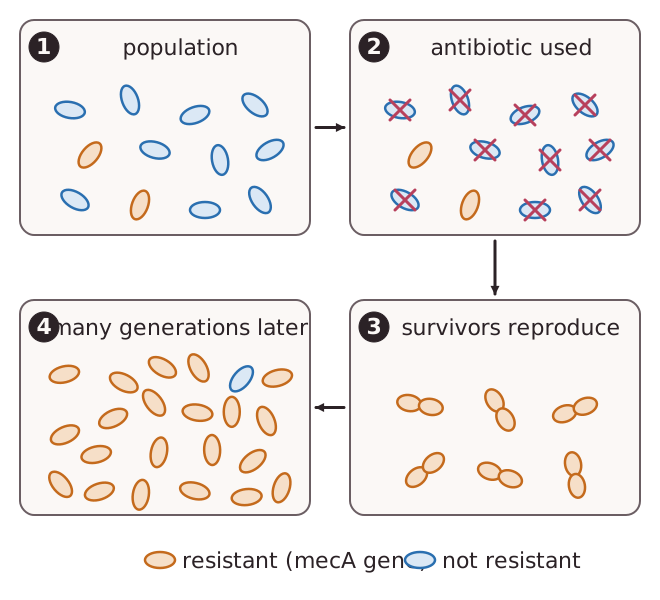 Flavobacterium in wastewaterscientists have found a new strain of Flavobacterium living in wastewater of factories that produce nylon-6.Scientists believe a gene duplication followed by a frameshift mutation enabled some bacteria to produce enzymes called nylonases which can digest nylon-6.Sheep blowfliesSheep blowflies lay their eggs in faeces around sheep's tails.The larvae then hatch and cause sores. This condition is called flystrike and fatal if left untreated.The organophosphate diazinon is an insecticide used to treat the condition.Within 6 years the blowflies developed a high level of resistance to the pesticide.Investigations revealed that there was a pre-adaptation to the insecticide.Pre-adaptation is when an organism already has a feature that would give it an advantage in a new situation.
MRSA (Methicillin resistant staphylococcus aureus) has developed resistance to many antibiotics.The mecA gene codes for an altered penicillin-binding protein that methicillin and similar antibiotics cannot bind to, so they can no longer stop cell wall synthesis. When bacteria replicate, the gene is copied and passed on.When certain antibiotics are used, bacteria with the gene will survive while other non-resistant bacteria are killed.These bacteria reproduce and pass on the allele to their offspring by vertical transmission (binary fission).Over many generations the allele frequency increases.
Flavobacterium in wastewaterscientists have found a new strain of Flavobacterium living in wastewater of factories that produce nylon-6.Scientists believe a gene duplication followed by a frameshift mutation enabled some bacteria to produce enzymes called nylonases which can digest nylon-6.Sheep blowfliesSheep blowflies lay their eggs in faeces around sheep's tails.The larvae then hatch and cause sores. This condition is called flystrike and fatal if left untreated.The organophosphate diazinon is an insecticide used to treat the condition.Within 6 years the blowflies developed a high level of resistance to the pesticide.Investigations revealed that there was a pre-adaptation to the insecticide.Pre-adaptation is when an organism already has a feature that would give it an advantage in a new situation.